Hightex area of expertise: Textile precision for complex fibre composite components
Tailored fibre placement (TFP), which we invented in-house, is our textile-based key process for placing fibres in reinforcing structures precisely along the load paths - in a resource-saving, reproducible and near-net-shape manner. With TFP, we exploit the full potential of fibre-reinforced materials and enable mechanically and economically optimised component design.
Brief advantages: Fibre orientation to suit the load - Minimal waste - Industrial reproducibility - Independent of the fibre material - Close contour preforms






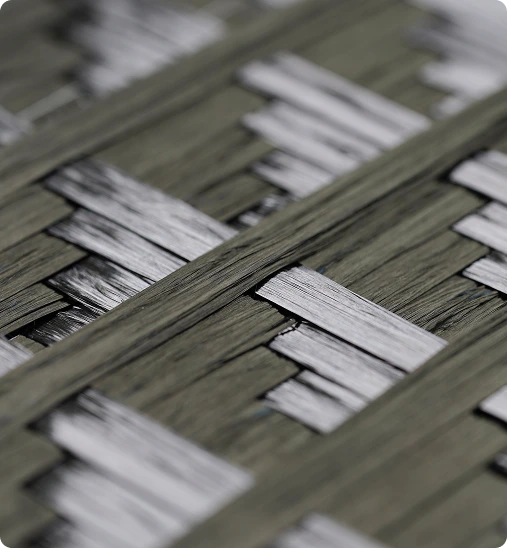
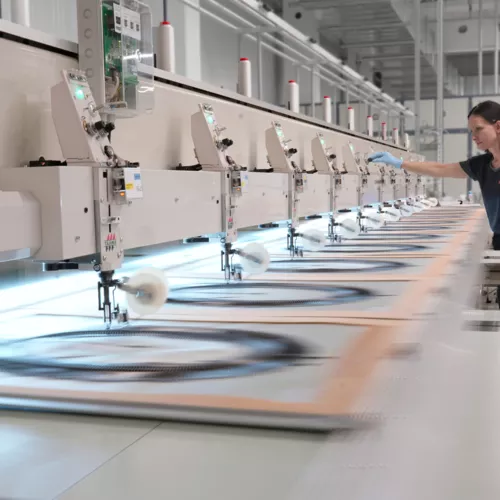
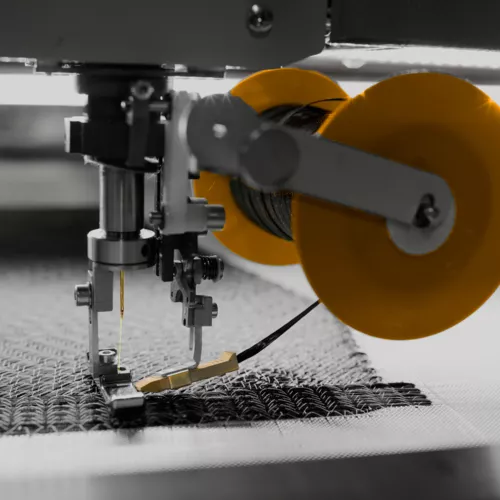
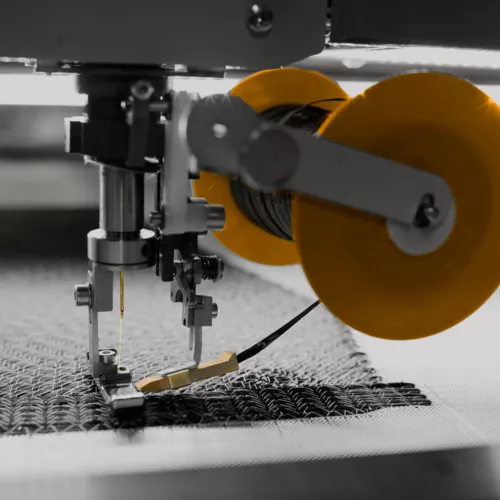
Tailored fibre placement (TFP) is a textile manufacturing process for the production of complex, stress-appropriate reinforcement structures for fibre composite components. Technically, TFP is based on a modified embroidery process: CNC-controlled automatic machines place rovings (e.g. carbon, glass or aramid fibres) on a carrier material („embroidery base“) along arbitrarily curved lines and fix them in place using sewing stitches. This creates flat sub-preforms with variable fibre orientation in the plane - the basis for optimal component mechanics that are suitable for the stresses involved.
Differentiation from classic fibre laying processes: In contrast to processes with which preforms are manufactured from unidirectional, woven or laid semi-finished products, TFP enables the targeted guidance of rovings in freely definable curves, including localised thickening through repeated stitching. The result: load-path-optimised fibre paths, minimised material consumption and a significant reduction in the effort required to manufacture the preforms.
Basic principle in brief:
The TFP technology was developed at the IPF Dresden in the early 1990's. The developers of the TFP, Dr Gliesche and Dr Dirk Feltin, founded the company Hightex in 1993.
Originally, the reinforcement structures (preforms) were created by hand after the industry expressed a need for fibre-reinforced plastic components (FRP) with stress-optimised, curved fibre guidance. In the mid-1990s, the process was adapted so that it could be implemented on industrial embroidery machines, making targeted use of their sewing functions. The term „tailored fibre placement“ refers to the possibility of positioning fibres variably, axially and close to the final contour.
TFP is an ultra-modern, CNC-controlled machine. Embroidery process, which places reinforcing fibres (such as carbon or glass) exactly where they are mechanically required.
Derivation of the desired fibre courses from simulation and design data.
Transfer of the fibre course into CNC embroidery paths with defined stitch width and sewing parameters.
Curved, stress-appropriate placement of the rovings on the embroidery base, including defined spreading of the rovings.
Sewing on the rovings (upper/bottom thread) - compatible with later resin/matrix system.
Formation of sub-preforms; if necessary, joining of several substructures, draping for double-curved geometries.
Infiltration with a thermoset matrix or thermoplastic consolidation to create the final fibre-plastic composite
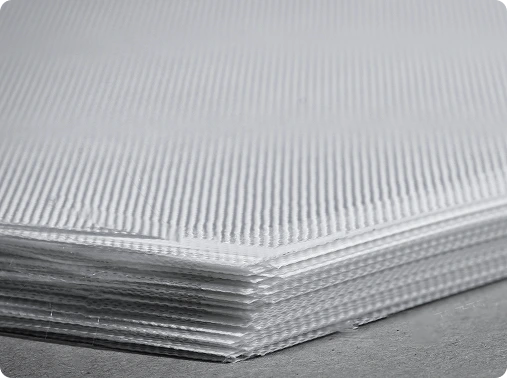
Fibre orientation, stitch width, sewing speed, thread/yarn system, trajectory accuracy, roving width (incl. spreading), overstitching frequency for local thickness adjustment.
Carbon, glass, aramid as well as natural and ceramic-based fibres. The embroidery base can be removed after the process and does not affect the subsequent structure.
TFP sub-preforms can be reliably integrated into all fibre composite components and combined with other preforming technologies. Application-specific tools (e.g. heated moulds) are useful for joining and assembling the preforms in order to optimally adjust drapability, radii, fibre volume content and layer thickness gradients.
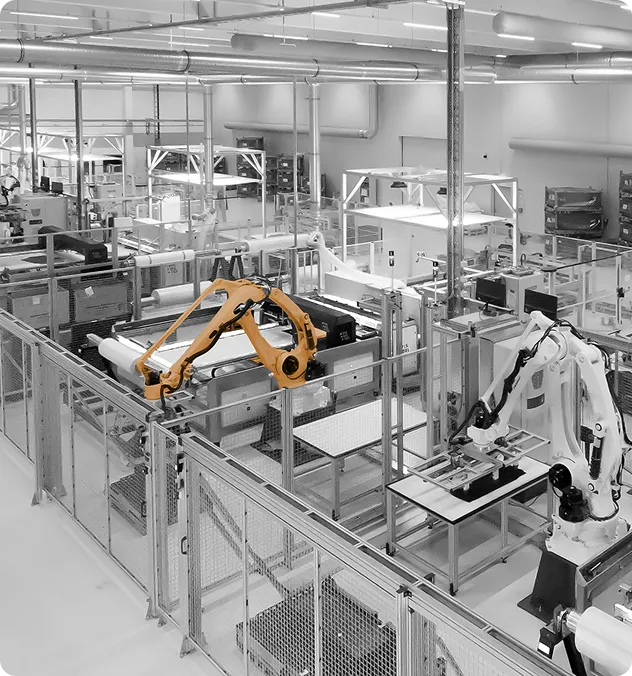
Advantages (extract):
Potential disadvantages / challenges:
Fibres: all textile-processable fibres can be used depending on the specific mechanical, temperature and media resistance requirements
Matrix systems: All matrix systems possible, thermosets and thermoplastics; hybrid yarns and pre-impregnated systems such as tapes or towpregs can also be processed
Property profile (exemplary):
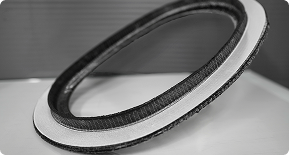
Aviation: Frame and stringer structures, seat components, winglets - weight reduction with high structural integrity.
Automobile: Crash-relevant reinforcements, local stiffeners, load-path-compatible lightweight components.
Space travel: high-temperature stable structures, antenna and frame components with precise fibre guidance.
Industry & mechanical engineering: Robotic arms, rotor/pressure vessel preforms, sports equipment and precision housing structures.
Our experience shows that Tailored fibre placement unfolds its greatest benefits when load paths from the simulation are consistently transferred to optimised reinforcement structures and preforms and the opportunities for large-scale production are taken into account at an early stage. Two fictitious but realistic examples illustrate typical results.
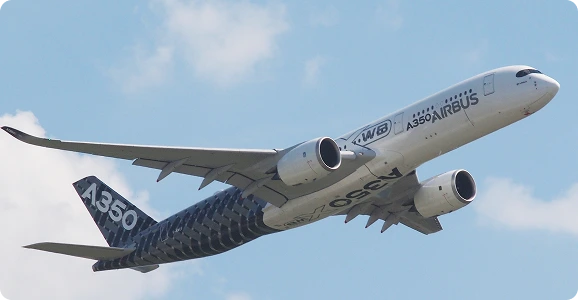
Task: Weight and waste reduction with a window frame reinforcement in CFRP.
Approach:
Result (typical order of magnitude):

Task: Lightweight reinforcement with localised energy absorption and limited installation height.
Approach:
Result (typical order of magnitude):
TFP (Tailored Fibre Placement) is a textile-based embroidery/sewing process for placing individual rovings along curved load paths on an embroidery base. AFP (Automated Fibre Placement) places pre-spread tapes/tows using placement heads. TFP offers high trajectory freedom and near-net-shape preforms on a textile substrate.
The stitch width influences the fixation and local consolidation of the roving. A stitch geometry must be selected that securely fixes the fibre layer without promoting unwanted notch or resin accumulation - adapted to the yarn, roving width and matrix system.
Carbon, glass, aramid, natural and ceramic fibres; matrix systems made of thermosets or thermoplastics. Compatible yarn/bobbin thread systems and an embroidery base suitable for the process are important.
The achievable strength is component-specific and depends on the fibre trajectories, layer structure, roving width, stitch pattern and resin system. Outstanding mechanical properties with low scatter can be achieved through load path-appropriate fibre routing. As a result, the permissible stresses in TFP components are usually higher than in classic FRP components.
Maximised material efficiency thanks to load path-optimised mechanics, reproducible series capability and near-net-shape preforms - especially for complex geometries. The near-net-shape production of preforms reduces waste and therefore not only improves the cost situation but also offers a significant sustainability advantage.
Contact us now - we can advise you on design, preforming and series integration.