Lighter, more powerful and more dynamic - reliable in series production.
With Tailored fibre placement (TFP), Binding, Precise cutting and automatic high-volume preforming we deliver Semi-finished textile products and preforms for industrial applications: robot-compatible handling, predictable cycles, robust quality - from individual items to large series.
In mechanical and plant engineering, robotics and automation - there are numerous components and applications in which fibre composites offer advantages in production and operation. The skilful use of composites can often achieve a significant reduction in mass through lower density and optimum material utilisation, as well as improved positioning precision through greater rigidity and better damping behaviour.
In principle, lighter structures mean that the operation of machines and systems higher accelerations, Shorter cycle times, lower energy requirements and Less wear and tear can be achieved. At the same time, composite components with a suitable design are highly rigid, Dimensionally stable and media-resistant be. Textile preforms from Hightex also enable Fibre paths suitable for load paths and near-net-shape geometries - with reproducible processes for series production.
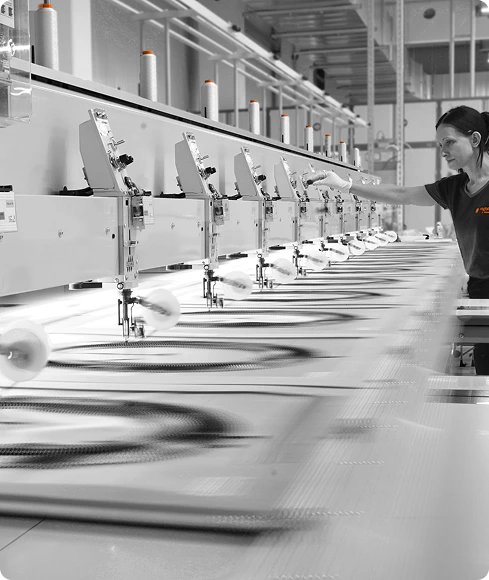
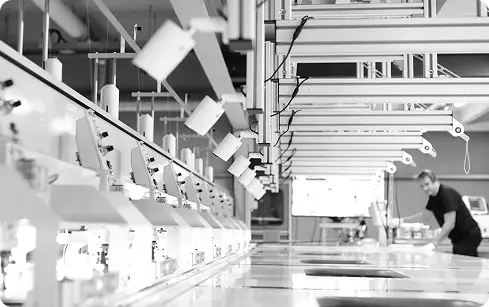
Fibres along the load paths - local wall thickness variations, exact trajectories, minimised waste.
Powder connector for dimensionally stable 3D preforms on heated moulds - process-safe in RTM/infusion or thermoplastic.
Single layer/multi-layer cutter, Laser (clean GF edges), Roll punching machine - precise positioning, safe handling, kitting.
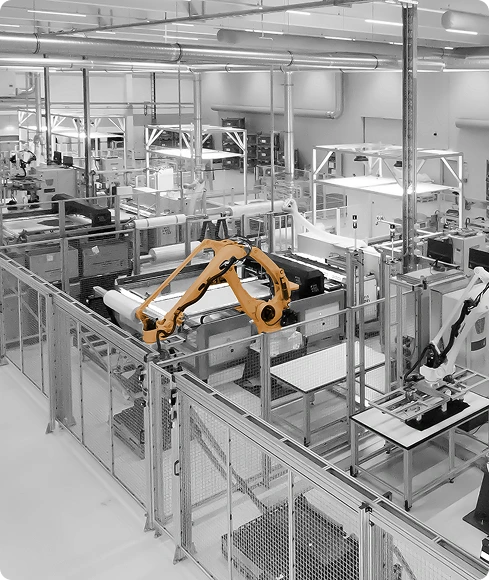
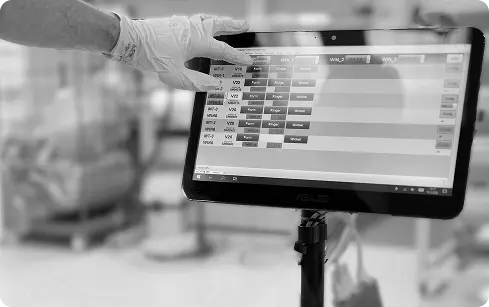
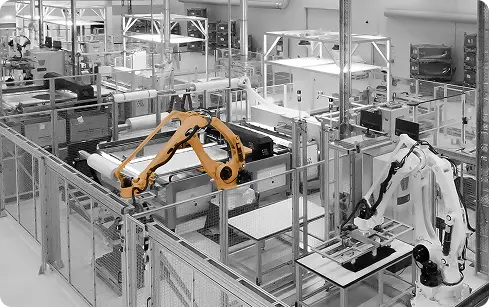
Robotics, heated moulds, inline quality Scalable from pilot cell to multi-line setup.
< 100 s Cycle per preform - up to 17 000 Preforms/week (depending on component) - Preform size up to 1.70 x 1.70 m
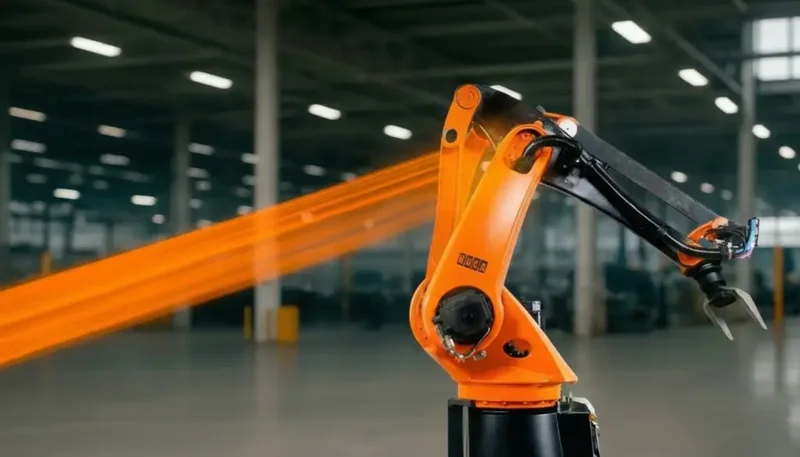
In industry, TFP enables the production of of highly dynamic machine components (such as robot arms or grippers), which achieve significantly faster cycle times and greater energy efficiency thanks to their lower dead weight. Thanks to the precise fibre guidance, it is also possible to Functional elements such as heating wires or sensors directly into the component. The virtually waste-free production process also reduces material costs while maximising resilience.
Grippers/end effectors, CF carriers, cantilevers, linear axis components
Lightweight frames/stiffeners, brackets, highly rigid covers, vibration management
Lightweight beams, guide elements, dynamic-optimised modules
Precise, temperature-stable structural parts and mounts
Corrosion-resistant components, electrically non-conductive components
Load paths, fibre trajectories, tolerances, production concept
stress-appropriate, near-net-shape
Heated moulds, defined temperature/pressure window
CAD nesting, labelling/ID, kit-compatible provision
Robot handling, inline geometry check, buffer/logistics
RTM/infusion or thermoplastic consolidation
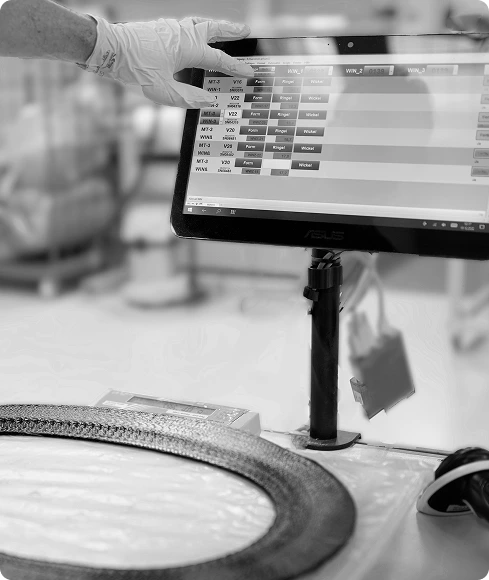
Parameter logging, good/error feedback, traceability
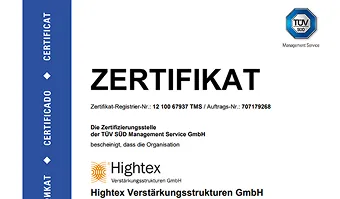
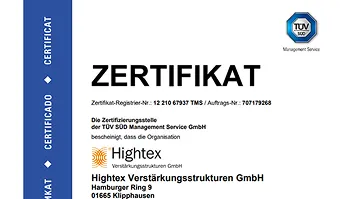
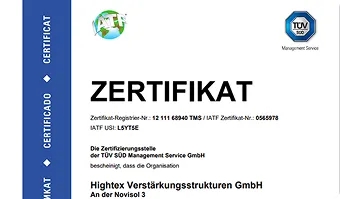
Certified quality management
Documented parameter windows (temperature/pressure/time), optical path/geometry checks, area weights
Component ID, batches, process data; optional ERP/MES connection
Textile hybrid fabrics, contour-accurate multilayer plies and TFP sub-preforms handling-stable and Process reliable for further processing. Focus: Precise geometry, Minimised waste, Kitting suitable for series production.
From compact gripper components to larger gantry carriers. We adapt the mould and gripper design to your contour.
Yes, we integrate Crop/Stacking, Marking, Buffer/tray handling and bind data to ERP/MES back.
Both are possible. We select binder, yarn and matrix application orientated and ensure compatibility in the process.
With a Feasibility workshop, CAD data (layers/geometry), tolerances, quantities and target cycle. After that: Sampling → parameter freeze → series ramp-up.
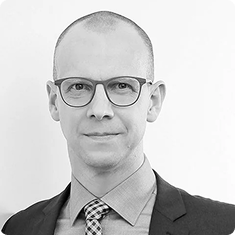
He has over 20 years of experience in fibre composite and lightweight construction technology and is familiar with the challenges of mechanical and plant engineering down to the last detail thanks to his experience in engineering at an engineering firm.
In direct dialogue, in project workshops or at trade fairs Kai Steinbach is your first point of contact for textile reinforcement structures and Composite prototypes.
We develop and manufacture Preforms and semi-finished products exactly according to your requirements - from prototype to large-scale production.